

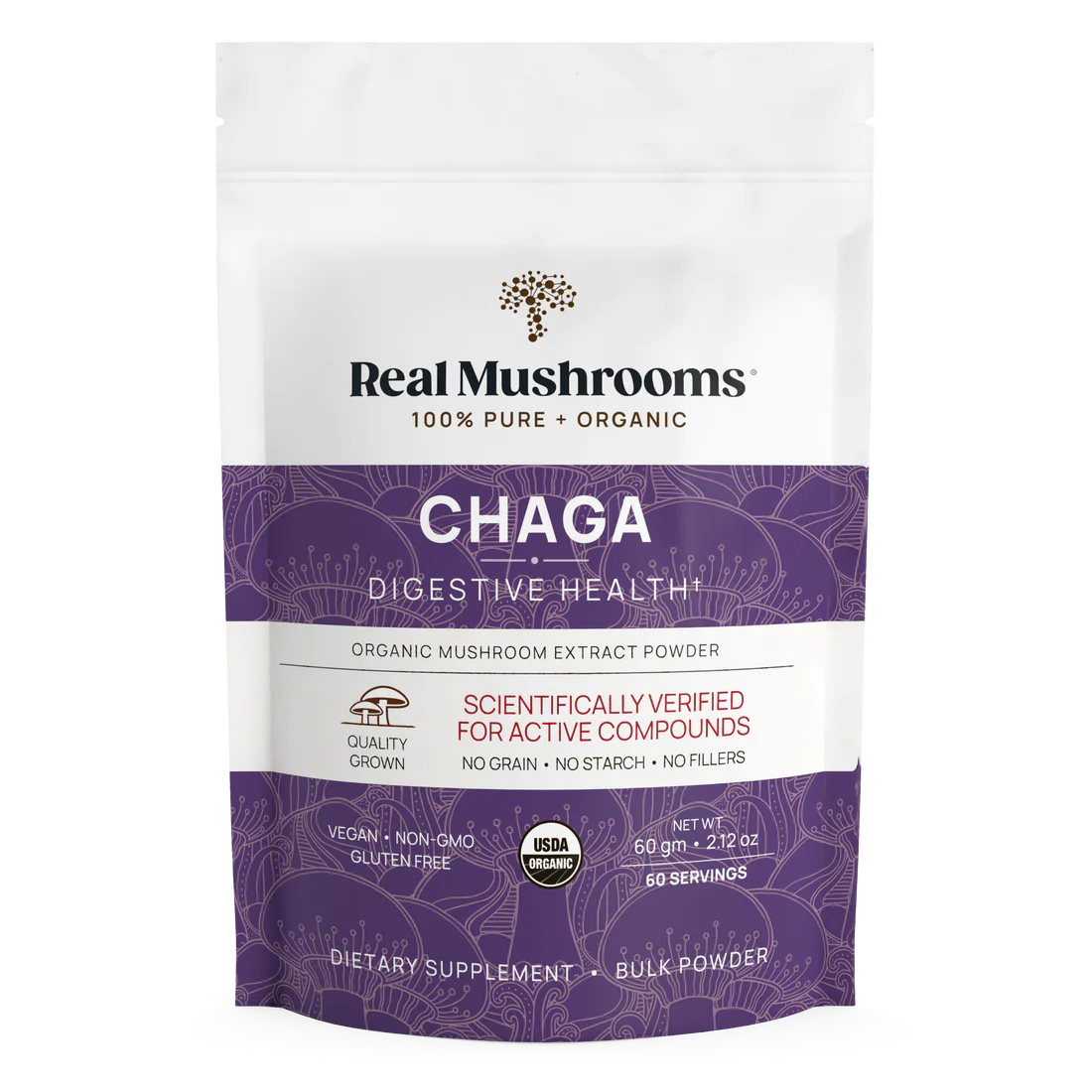
Extrait de Chaga (poudre)
- 48.99$
- 48.99$
- Prix unitaire
- par

• Le chaga est riche en antioxydants et soutient la fonction immunitaire, la santé du foie, la santé du cerveau et augmente la longévité. Il est également connu pour sa capacité à stimuler la digestion et à dégager la peau.
Chaga ou Inonotus obliquus, communément appelé champignon, est en fait un sclérote ou un cancer boisé très prisé qui pousse dans les régions les plus froides de l'hémisphère Nord sur des bouleaux. Les premières utilisations médicinales semblent être sorties de Russie vers le XVIe siècle lorsqu'elles ont été utilisées comme thé pour traiter les maux d'estomac*. Après 1966, Chaga a gagné en visibilité après que ses pouvoirs de guérison aient été écrits dans le livre d'Alexandre Solzhenitsyn, Cancer Ward. Comme le Chaga pousse principalement sur les bouleaux et qu'une grande partie du sclérote lui-même est en fait de la fibre de bois et non du mycélium, de nombreux composés médicinaux du bouleau comme la betuline et l'acide betulinique se retrouvent dans le sclérotique. La couche noire extérieure du cancer contient de grandes quantités de mélanine qui peuvent être bénéfiques pour notre peau*.
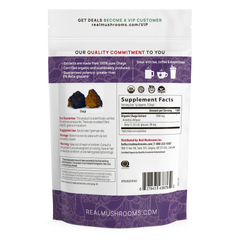
Jusqu'à récemment, le Chaga ne pouvait pas être cultivé, mais maintenant en Finlande, ils inoculent des bouleaux avec ce champignon. Le Chaga cultivé en laboratoire ne se développe pas en sclérothium et comme il ne pousse pas sur le bouleau mais sur le grain, il ne contient pas les composés médicinaux importants qui proviennent du bouleau. L'extrait de Real Mushroom Siberian Chaga est récolté à l'état sauvage en Russie et testé par des laboratoires tiers pour les composés actifs bêta-D-glucans qui sont la quintessence de nutriments pour le système immunitaire.
- Chaga is rich in antioxidants and supports immune function, liver health, brain health, and increases longevity. It is also known for its ability to stimulate digestion and clear the skin.
Chaga, or Inonotus obliquus, commonly known as the mushroom, is actually a highly prized sclerotium or woody cancer that grows in the colder regions of the Northern Hemisphere on birch trees. The first medicinal uses appear to have come out of Russia around the 16th century when it was used as a tea to treat stomach ailments. After 1966, Chaga gained more visibility after its healing powers were written about in Alexander Solzhenitsyn's book, Cancer Ward. Since Chaga grows primarily on birch trees and much of the sclerotium itself is actually wood fiber and not mycelium, many of the medicinal compounds in birch, such as betulin and betulinic acid, are found in the sclerotium. The outer black layer of the cancer contains large amounts of melanin, which can be beneficial for our skin.
Until recently, Chaga could not be cultivated, but now in Finland, they are inoculating birch trees with this mushroom. Lab-grown Chaga does not develop into sclerothium, and since it grows on grain rather than birch, it does not contain the important medicinal compounds that come from birch. Real Mushroom Siberian Chaga extract is wild-harvested in Russia and tested by third-party labs for the active beta-D-glucan compounds, which are the epitome of nutrients for the immune system.
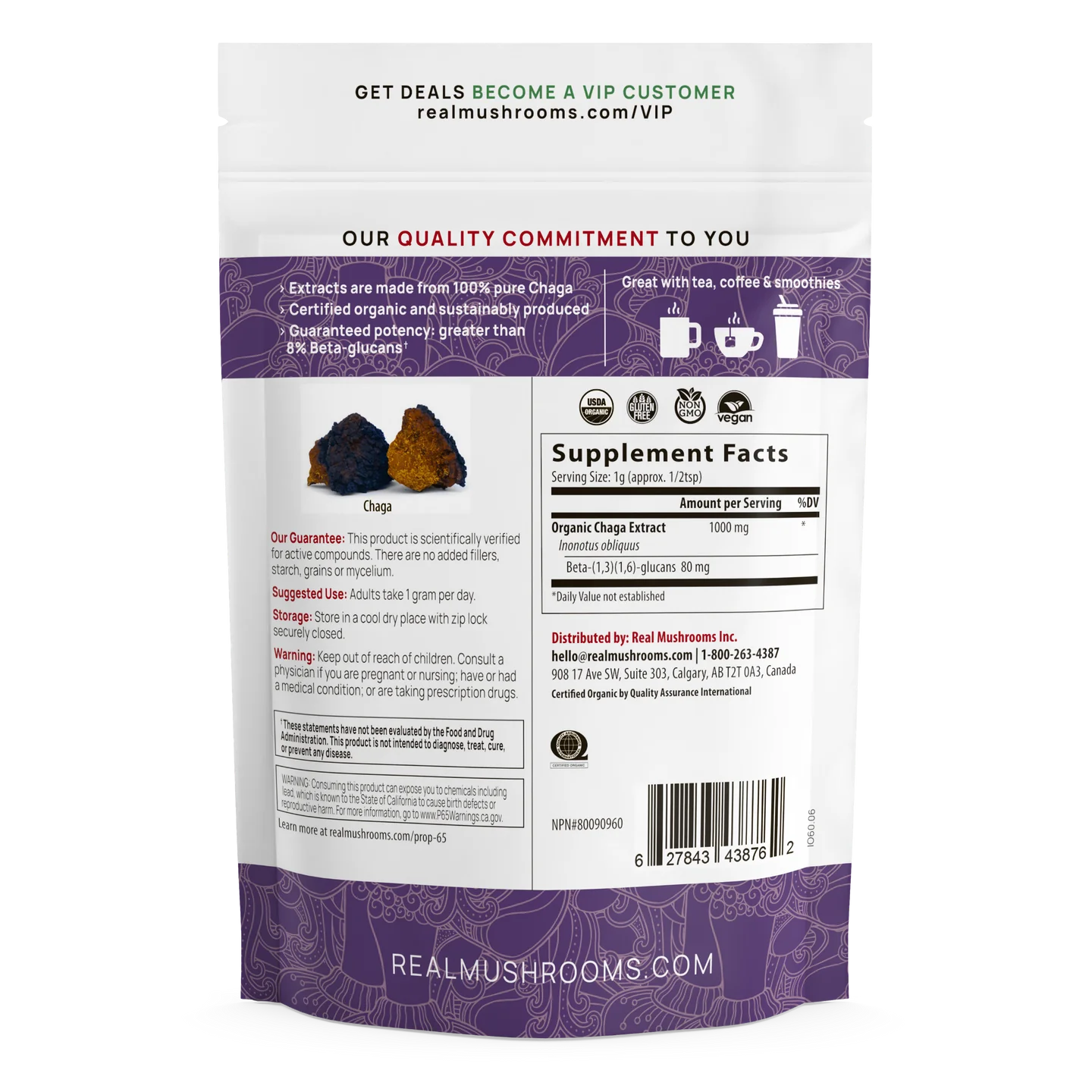
Adultes : 1⁄2 ou 1 gramme par jour ou selon les recommandations de votre praticien.
Adults: 1/2 or 1 gram daily or as directed by your practitioner.
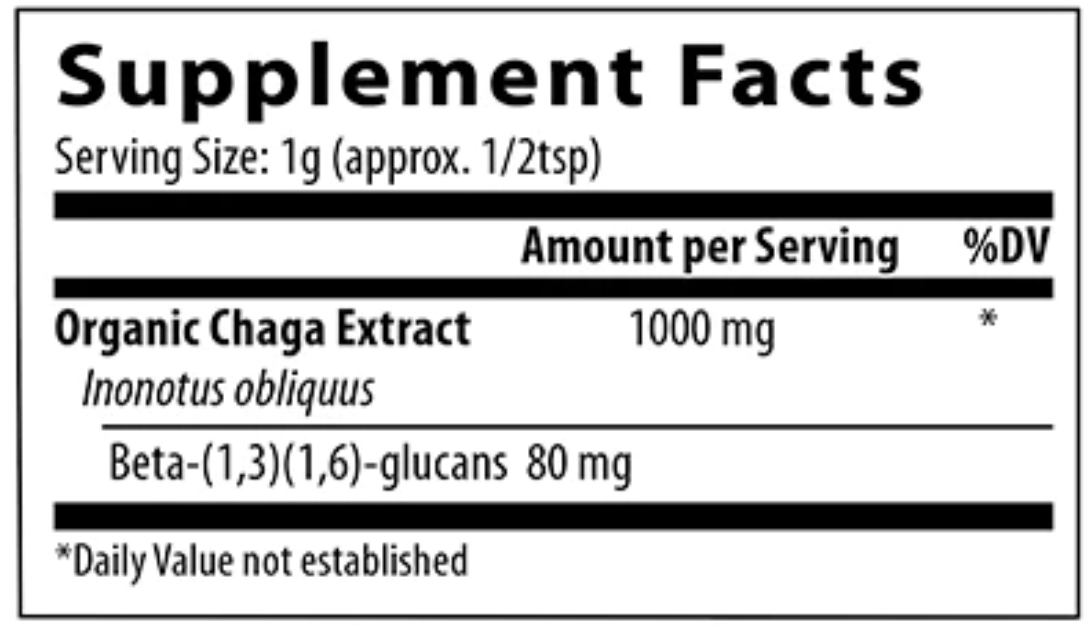
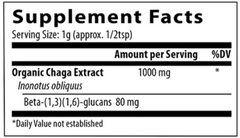
Ingrédients médicinaux (par 1 g): Extrait de chaga biologique (Inonotus obliquus) ...... 1000mg
Beta(1,3)(1,6)-glucans .... 80 mg
Medicinal Ingredients (per 1 g): Organic Chaga Extract (Inonotus obliquus) 1000 mg
Beta(1,3)(1,6)-glucans . 80 mg
Recommandations
Produits récemment consultés
- Le choix d’une sélection entraîne une actualisation complète de la page.